NVIDIA Releases Nemotron 3.5 Transcribe, an Open Speech Model
· Cortex Solutions
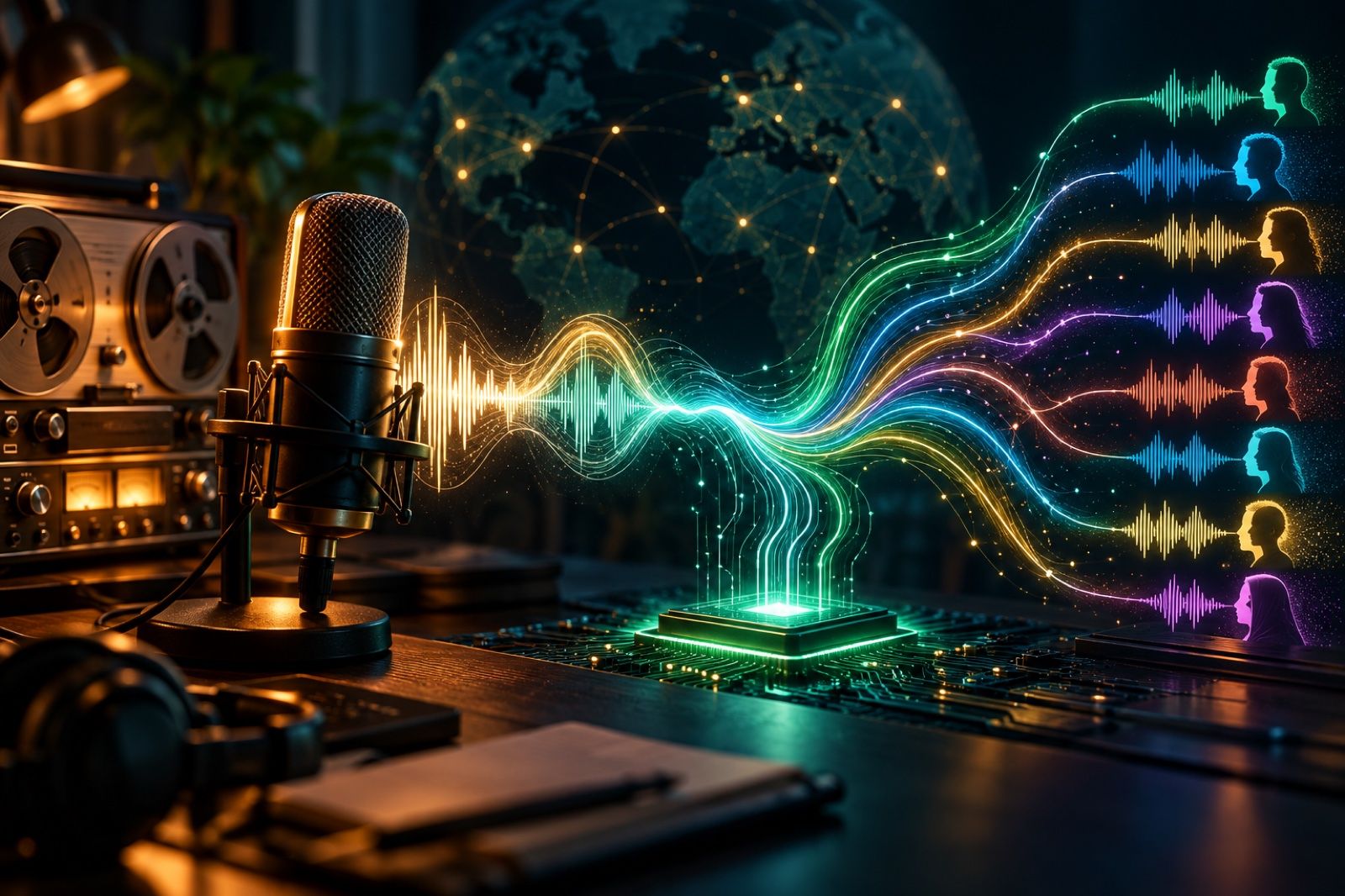
On October 28, NVIDIA released Nemotron 3.5 Transcribe, an open-weight model that transcribes 40 languages, translates 31 and separates speakers in hour-long recordings.
On October 28, 2026, NVIDIA announced a new speech-to-text model called Nemotron 3.5 Transcribe, releasing it as an open-weight model that developers and companies can download and run on their own hardware. The announcement came through NVIDIA's blog on Hugging Face and the official model card, and was covered the same day by tech outlets including TechCrunch, in a report by Julie Bort, and The Next Web, in a report by Ana Maria Constantin.
What does the model do?
According to NVIDIA's blog, the model transcribes speech in 40 languages, translates 31 of them to or from English, labels up to eight speakers in a single recording, and handles recordings up to an hour long. In other words, it does not just turn audio into words; it identifies who said what, which matters for transcribing meetings, calls and interviews.
On Arabic, the language table published on the model card on Hugging Face shows Arabic as supported for transcription, translation to and from English, multi-speaker transcription and code-switching within the same conversation. The press reports did not name Arabic, so the official table is the reference on this point.
Architecture and size
NVIDIA describes the model as a hybrid Mamba–Transformer mixture-of-experts language model built on its Nemotron 3.5 Lightning model. The company's blog says only about 4 billion of its 30 billion parameters are active at each step, which makes it faster and cheaper to run. The model card lists 34 billion parameters in total once the audio encoder is included. According to The Next Web, the model runs on a single NVIDIA chip, from small Jetson boards to data-centre GPUs.
Performance according to NVIDIA's figures
- The model ranks first among open-weight models on Hugging Face's English Open ASR Leaderboard, with an average word error rate of 5.33%, according to NVIDIA's blog and The Next Web.
- On the Artificial Analysis index it ties for first among open models at a 2.8% error rate, according to the company's blog.
- NVIDIA says a single RTX PRO 6000 Blackwell GPU can transcribe 100 hours of audio in under three minutes using the forthcoming NVFP4 version.
These are figures reported by the company itself, and real-world results will naturally vary with recording quality, dialect and content.
Limits to know
NVIDIA and TechCrunch made clear that the model is built for recorded audio, not live streams. The model card states that it is an offline model and that internal audio chunking does not make it a real-time streaming service. That means it suits transcribing a call or meeting after it ends, not live translation during the conversation.
Licence and availability
The model card says use is governed by the OpenMDW licence, version 1.1, and that the model is ready for commercial and non-commercial use. It is available on Hugging Face and ModelScope, and through hosting services including Baseten, DeepInfra and Simplismart. DeepInfra announced on its blog on October 28 that it charges $0.002 per minute, or $0.12 per hour, noting that speaker attribution in its API is "coming soon".
Granary v2: open data too
Alongside the model, NVIDIA released the second version of its open speech dataset, Granary. According to the company's blog, it contains 463,062 hours of speech in 48 languages from 16 sources, up from 25 languages in the first version. NVIDIA notes that the original audio must be downloaded from each source under its own licence.
The company also gave an example of adapting the model to a specialised field: after adapting it with data that included medical recordings and accented English speech, and testing it on recordings of Indian doctors from the Eka Care benchmark, the error rate fell from 22.44% to 12.17%, a 45.8% relative reduction, in about 14 hours of compute on a single GPU.
What does this mean for Saudi businesses?
- Transcribing calls and meetings in-house: because the weights are open, companies that care about data privacy can run transcription on their own servers, which fits the Kingdom's personal data protection requirements.
- Customer service: contact-centre recordings can be turned into searchable text, with the agent's voice separated from the customer's, to surface recurring complaints and assess quality.
- Arabic is officially listed: Arabic appearing in the supported-language table is an important step, but companies should test the model on their own dialects and real recordings before relying on it, since the published figures focus mainly on English.
- Cost: open models and low hosting prices put transcription of thousands of hours within reach of mid-sized companies.
- Domain adaptation: the medical example shows that training the model on a sector's terminology, such as insurance, real estate or healthcare, can noticeably improve its accuracy.
At Cortex Solutions we help companies bring voice AI into their operations, from contact centres to process automation. Learn about our AI and automation services: https://cortex.sa/services/ai-automation